Kuwi versi cekakane. Iki tegese AI-native, apa sing ditawakake ing toko nyata, pira regane, lan ing endi toko-toko terus salah.
Apa Tegese "AI-Native" Sejatine
Wis pirang-pirang taun, AI ing permesinan tegese kothak pihak katelu sing disambungake menyang mesin sing wis ana. Data kasebut metu saka mesin, dianalisis ing papan liya, lan bali minangka laporan sing ora diwaca dening sapa wae.
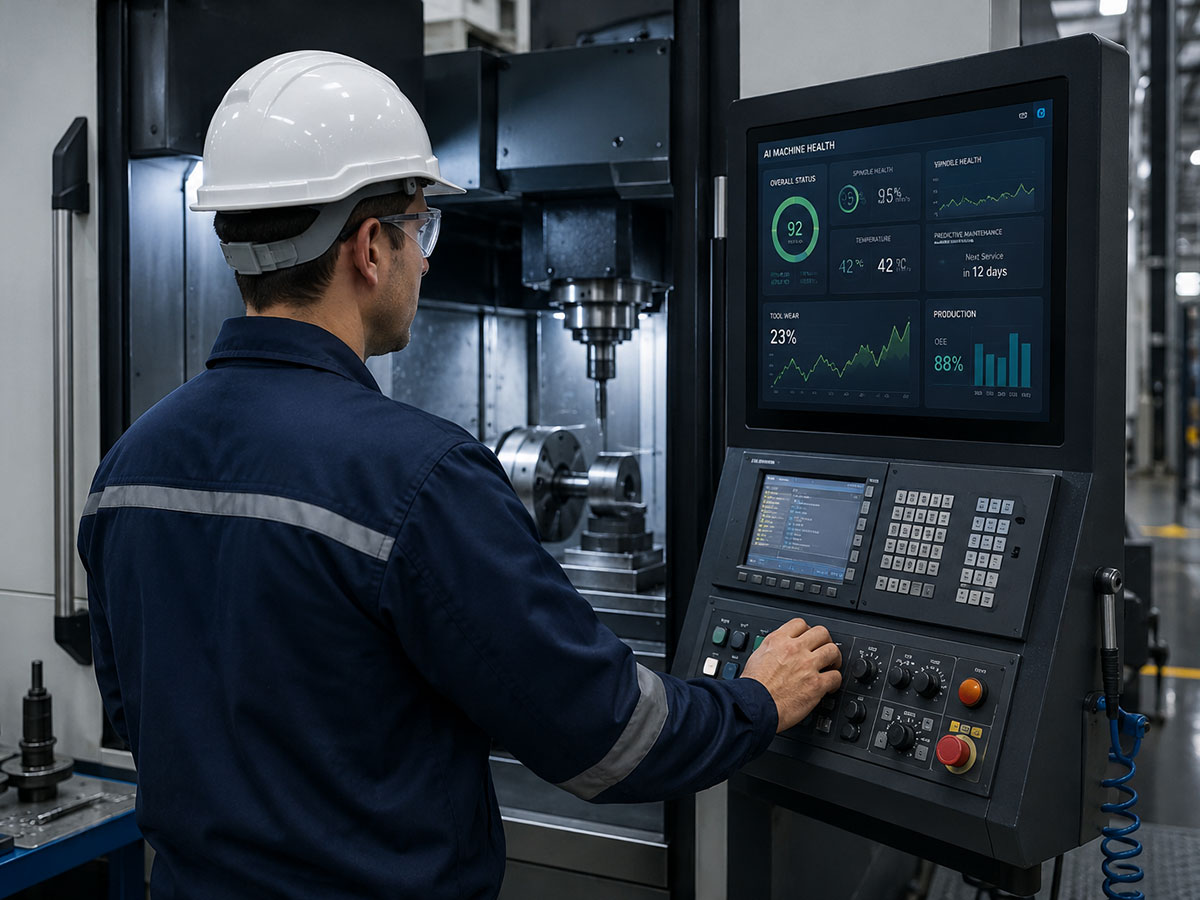
AI-native iku beda. Kecerdasan mlaku ing njero kontrol mesin kasebut dhewe. Sawetara Cnc Kontrol saiki dilengkapi saluran analitik getaran bawaan, saengga model AI bisa mlaku langsung ing piranti, nyaring gangguan sacara lokal, lan mung ngirim pola sing penting.
Owah-owahan kuwi penting amarga 2 alesan. Keputusan kedadeyan sajrone milidetik tinimbang sewengi, lan data mesin sing dipatenake tetep dilindhungi tinimbang streaming mentah menyang méga.
Angka Adopsi 2026
Data kasebut nuduhake teknologi sing nyebrang saka proyek pilot menyang praktik standar:
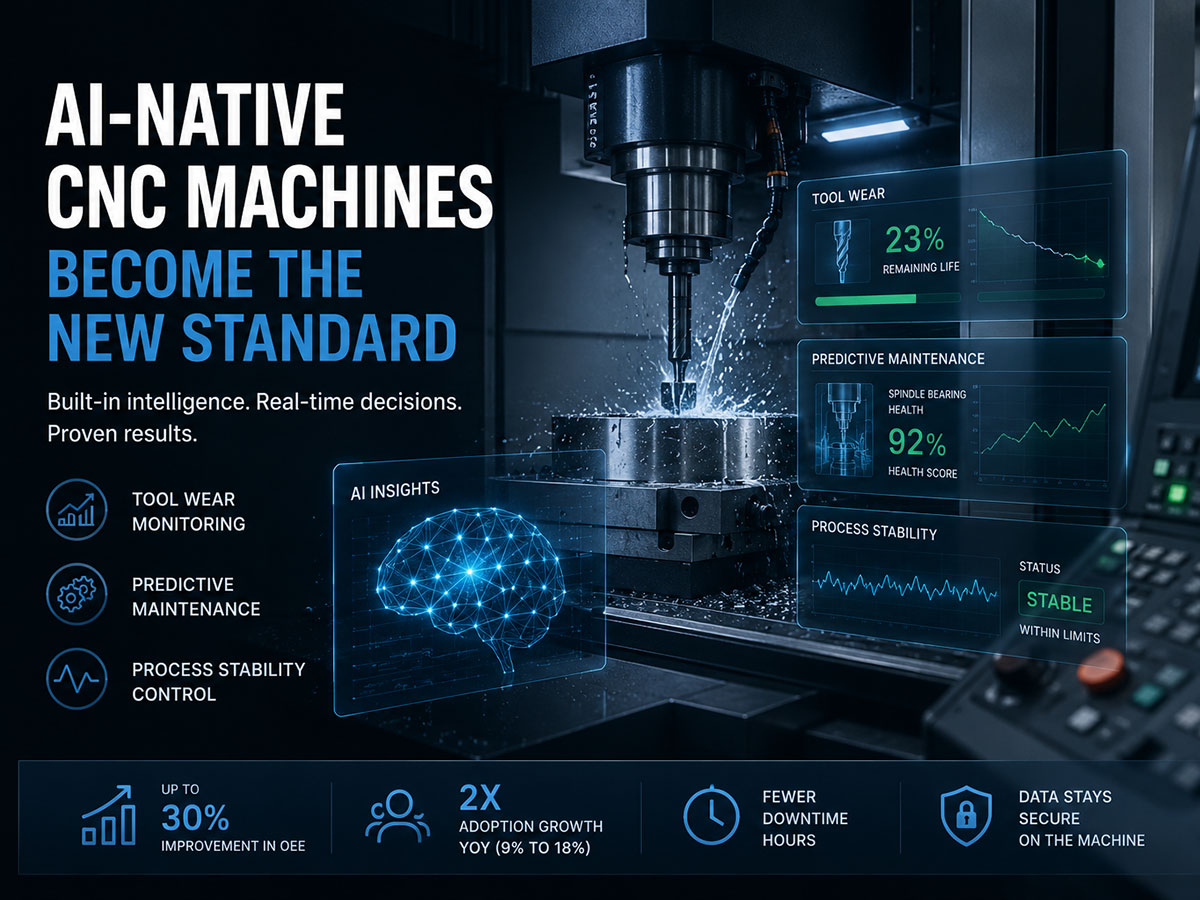
• Adopsi pangopènan prediktif mundhak kaping pindho saka 9 persen dadi 18 persen saben taun (Fluke, Mei 2026).
• Pangopènan reaktif "ndandani nalika rusak" tetep ora owah ing 36 persen toko.
• Asil saka laporan pelanggan saka vendor kalebu peningkatan 30 persen ing efektifitas peralatan sakabèhé (IPercept, liwat MachineToolNews.ai).
• Katrampilan tenaga kerja dianggep minangka alangan utama kanggo kedewasaan digital ing survey Fluke sing padha.
• Laporan tren industri kanthi konsisten nyebutake deteksi keausan alat, perawatan prediktif, lan rekomendasi parameter pemotongan minangka 3 aplikasi praktis sing saya tambah populer.
Siji pangeling-eling jujur sing penting kanggo kepercayaan: angka kinerja paling kuat ing pasar iki yaiku asil pelanggan sing dilapurake vendor, dudu audit independen. Anggep wae minangka conto sing bisa dipercaya, dudu asil sing dijamin kanggo toko sampeyan.
3 Aplikasi Sing Bener-bener Bisa Digunakake ing Taun 2026
Pelaporan industri ora selaras karo iki. Analisis tren Stecker Machine taun 2026 nggambarake AI ing permesinan minangka tahap awal nanging entuk daya tarik nyata ing 3 area. Iki sing ditindakake saben area.
Alat Ngawasi Wear
Model AI maca sinyal beban spindel, getaran, lan gaya potong kanggo nglacak sepira aus piranti kasebut, tinimbang ngira-ngira saka counter tetep. Sistem kasebut nyaranake panggantian piranti sadurunge kualitas mudhun utawa kerusakan saya cedhak.
Bayarane tikel loro. Toko-toko mandheg mbuwang bagean sing dipotong nganggo piranti sing wis mati, lan mandheg mbuwang piranti sing isih bisa digunakake. Milih sing berkualitas Mata bor lan piranti pemotong CNC tetep dadi pondasi; AI mung njupuk saben jam urip saka dheweke.
Pangopènan prediktif
Iki aplikasi kanthi jejak dhuwit sing paling jelas. AI sinau getaran normal, suhu, lan tandha arus komponen kaya bantalan spindel, sekrup bal, lan pompa. Nalika pola kasebut owah, sistem menehi tandha yen ana masalah keausan, ketidakseimbangan, utawa pelumasan sing ora bisa dideleng dening inspeksi manual.
Interval layanan tetep diganti karo tandha-tandha sing adhedhasar data. Pangopènan ditindakake nalika mesin mbutuhake, dudu nalika kalender kasebut nyebutake. Spindle minangka titik sing paling penting ing kene, amarga kegagalan spindle minangka salah sawijining kedadeyan sing ora direncanakake sing paling larang sing bisa dialami bengkel. Malah dhasar praktik perawatan spindel ngluwihi umur; Pemantauan AI nangkep apa sing ora kejawab dening pamriksaan rutin.
Kontrol Stabilitas Proses
Pilar kaping 3 ngawasi potongan kasebut dhewe. AI ngawasi obrolan, hanyutan termal, lan pola beban sajrone mesin lan nyetel feed lan kecepatan supaya proses tetep ana ing njero jendelane.
Kanggo bengkel campuran dhuwur sing terus-terusan mbukak suku cadang anyar, iki ngencengi kualitas tanpa mbutuhake masinis veteran kanggo njaga saben barang pisanan. Iki nyambung langsung karo dhasar-dhasar sing dibahas ing ringkesan kita babagan cara kerja mesin CNC.
Mbandhingaké 3 Aplikasi AI
| aplikasi | Takeran | kadewasan | Manfaat Khas | Syarat Utama |
| Ngawasi keausan alat | Ngurangi biaya scrap lan perkakas | Wis kabukten, disebarake kanthi wiyar | Onderdil sing rusak luwih sithik, umur piranti luwih dawa | Data sensor saka spindle lan sumbu |
| Pangopènan prediksi | Jam downtime sing ora direncanakake bisa dihindari | Terbukti, paling cepet tuwuh | Gagal sing kejiret sadurunge rusak | Periode data dasar, kepemilikan tandha bebaya |
| Kontrol stabilitas proses | Peningkatan hasil lintasan pertama | Muncul, maju kanthi cepet | Toleransi sing luwih ketat ing karya campuran dhuwur | Kontrol modern, kepercayaan parameter |
| Mesin otomatis kanthi lengkap | Jam mati lampu saben minggu | Durung standar | Diwatesi kanggo proyek sing bola-bali lan stabil | Pirang-pirang taun maneh kanggo umume toko |
Kolom Pangukuran minangka filter praktis. Yen sampeyan ora bisa nyebutake nomer endi sing bakal dipindhah fitur AI, sampeyan tuku demo, dudu alat.
Kepiye Sistem AI-Native Dibangun
Saben implementasi serius ngetutake struktur 4 lapisan sing padha, apa iku asale saka pembangun mesin utawa vendor retrofit:
• Pengumpulan dataSensor ing spindel, sumbu, lan pompa nangkep getaran, suhu, beban, arus servo, lan riwayat alarm.
• Analysis: model pembelajaran mesin nemtokake kaya apa tampilan normal kanggo saben mesin tartamtu.
• prediksi: sistem ngramalake komponen endi sing arep gagal lan kira-kira kapan.
• Tindakan: rute bebaya menyang wong sing njadwalake perbaikan sadurunge kerusakan.
Lapisan pungkasan kuwi panggonane proyèk urip utawa mati. Analisis CloudNC babagan pangopènan prediktif kanthi terus terang nerangake: data ora ngurangi downtime dhewe. Toko mung entuk nilai nalika data ngowahi keputusan. Prinsip sing padha ditrapake kanggo rutinitas. Pangopènan mesin CNC: dhaptar priksa mung bisa digunakake nalika ana wong sing nduweni.
Regane piro, lan sapa sing dodol
Para tukang mesin saiki ngemas AI minangka peralatan standar tinimbang dadi pilihan. Platform CELOS X saka DMG Mori nyambungake mesin, penjadwalan, lan analitik ing sak sistem, lan umume tukang mesin utama ngirim penawaran sing padha ing mesin anyar.
Kanggo peralatan sing wis ana, sistem pemantauan retrofit diwiwiti saka sawetara ewu dolar saben mesin kanggo penginderaan dhasar lan skala kanthi jangkoan. Biaya sing didhelikake dudu perangkat keras. Anggaran kanggo infrastruktur data, wektu integrasi, lan sing paling penting pelatihan, amarga kesenjangan katrampilan minangka alangan nomer siji sing dilapurake toko.
Titik wiwitan sing cerdas iku sempit: pilih siji mesin sing nyebabake gangguan paling akeh nalika mandheg, instrumentasikake, lan buktikake nilaine sadurunge diskalakake. Rincian kita babagan biaya mesin CNC logam nuduhake carane menehi model investasi lengkap lan pambayaran maneh.
Kepiye sejatine sing duwe toko takon babagan iki
Iki pitakonan-pitakonan obrolan sing lagi rame saiki. Yen wis tau krungu, sampeyan minangka pamirsa kanggo teknologi iki:
✓ "Apa AI ana ing Mesin CNC nyata utawa iki pemantauan kondisi sing padha karo label anyar?"
✓ "Apa aku isa nambah pangopènan prediktif ing pusat mesinku sing wis umur sepuluh taun utawa mung mesin anyar?"
✓ "Pira sasi data sing dibutuhake AI sadurunge tandha-tandhane nduweni makna?"
✓ "Sapa sing ngawasi tandha-tandha ing toko sing isine 5 wong sing saben wong wis duwe 2 pakaryan?"
✓ "Apa AI bakal ngganti feed lan kecepatanku tanpa takon dhisik?"
✓ "Apa sing kedadeyan karo data mesinku, lan apa tukang mesinku bisa ndeleng bagean-bagean pelangganku?"
Pitakonan pungkasan kuwi saya akeh sing dijawab kanthi apik. Analitik on-board sing ngolah data sacara lokal lan mung ngirim pola, dudu data bagean mentah, dadi arsitektur standar amarga saka iku.
Kesalahan Umum Nalika Nggunakake AI ing Mesin
Kegagalan iki kedadeyan maneh ing toko-toko saka macem-macem ukuran. Priksa dhaptar sadurunge nandatangani apa-apa:
• Nyambungake saben mesin ing dina pisanan tinimbang miwiti karo sing paling ngganggu.
• Tuku platform nanging ora menehi wewenang marang sapa wae sing duwe tandha-tandha kasebut.
• Ngarepake prediksi sing migunani sadurunge sistem duwe periode pembelajaran dhasar.
• Nganggep asil sing dilapurake vendor minangka asil sing dijamin kanggo toko sampeyan.
• Nglirwakake anggaran pelatihan nalika kesenjangan katrampilan minangka alangan utama sing wis didokumentasikake.
• Milih sistem tertutup sing ngunci data mesin sampeyan dadi siji vendor.
• Ngoyak berita utama babagan mesin otonom nalika nglewati dhasar-dhasar sing wis kabukten.
• Ora ngukur apa-apa sadurunge dipasang, sing ndadekake mbuktekake nilaine ora mungkin mengko.
Iki Bakal Terus Ngendi Sabanjure
Arah jangka pendek yaiku konvergensi. Platform generasi sabanjure nggabungake analitik spindel karo pemantauan kondisi alat, data aliran cairan pendingin, lan umpan balik kualitas bagean dadi siji puteran optimasi.
Tujuane yaiku mesin sing ora mung prédhiksi kegagalane dhewe nanging uga terus nyetel kabeh ekosistem mesin. Durung ana sing percaya yen iki standar. Kasunyatan 2026, sing dikonfirmasi ing laporan industri, yaiku teknologi tahap awal sing ngasilake kamenangan nyata nanging winates: luwih sithik barang bekas, luwih sithik kerusakan sing ora dikarepke, jendela proses sing luwih ketat.
Mulané saiki wayahe sing rasional kanggo miwiti. Toko-toko sing mbangun garis dasar data lan kabiasaan waspada saiki minangka toko sing diposisikan kanggo nggunakake kemampuan otonom nalika wis diwasa. Kanggo konteks pasar sing luwih gedhe sing ndorong investasi iki, tindakake kita Warta industri CNC, lan kanggo sisih perangkat keras critane, jelajahi Jajaran mesin CNC 5-sumbu ing ngendi kontrol sing siap AI saya tambah standar.
Pitakonan Paling Sering
Apa kuwi mesin CNC asli AI?
Piranti mesin kanthi kecerdasan buatan sing diintegrasi langsung menyang sistem kontrol tinimbang ditambahake liwat piranti lunak eksternal. AI ngolah data sensor ing papan lan tumindak kanthi wektu nyata.
Apa waé panggunaan AI sing wis kabukten ing mesin CNC ing taun 2026?
Ana 3 aplikasi sing dominan: pemantauan keausan alat, perawatan prediktif, lan kontrol stabilitas proses. Laporan tren industri terus-terusan ngidentifikasi iki minangka panggunaan praktis sing nambah traksi nalika mesin sing otonom isih muncul.
Sepira gedhene pangopènan prediktif bisa nyuda downtime?
Asil beda-beda miturut toko. Angka pelanggan sing dilapurake vendor kalebu peningkatan nganti 30 persen ing efektifitas peralatan sakabèhé, nanging iki mung conto tinimbang jaminan. Asil independen gumantung marang kualitas data lan tindak lanjut saka kabar.
Apa mesin CNC lawas isa nggunakake pemantauan AI?
Ya. Kit sensor retrofit nambahake pemantauan getaran, suhu, lan beban menyang mesin sing wis ana. Integrasi asli ing mesin anyar luwih lancar, nanging umur wae ora ateges mesin wis ora bisa digunakake.
Sepira cepet adopsi saya tambah?
Cepet saka basis cilik. Survei Fluke Mei 2026 nemokake yen panggunaan pangopènan prediktif tikel loro saben taun saka 9 persen dadi 18 persen, dene 36 persen operasi isih nglakokake pangopènan reaktif.
Apa alangan paling gedhe kanggo adopsi AI ing bengkel mesin?
Katrampilan tenaga kerja, miturut data survei 2026 sing padha. Teknologi kasebut bisa digunakake, nanging ana wong sing kudu mriksa data kasebut, percaya karo tandha-tandha kasebut, lan tumindak miturut data kasebut.
Apa AI ngganti masinis?
Ora. Sistem saiki menehi saran lan menehi tandha tinimbang ngganti penilaian. Sistem iki ngilangi tebakan saka pangowahan alat lan wektu pangopènan, sing ndadekake masinis sing berpengalaman luwih produktif, ora mubazir.
Data apa sing dipantau sistem iki?
Sinyal-sinyal umum kalebu beban spindel, getaran, suhu, arus servo, cacah siklus, lan riwayat alarm. Model sinau tandha normal saben mesin lan menehi tandha penyimpangan sing penting.
Sumber lan Cathetan Data
Angka-angka iki asale saka survey adopsi pangopènan prediktif Fluke Mei 2026, laporan MachineToolNews.ai 2026 kalebu wawancara IPercept, analisis tren CNC Stecker Machine 2026, riset pangopènan prediktif CloudNC, lan dokumentasi teknis Amfas lan Messer, sing disusun ing Juni 2026. Angka kinerja sing dilapurake vendor diidentifikasi kaya ngono ing saindenging jagad. Data adopsi kudu dipriksa maneh nalika gelombang survey anyar diterbitake.
Mbangun Toko Sampeyan ing Pondasi Modern
Pemantauan AI ngasilake asil paling apik kanggo mesin sing mumpuni lan dirawat kanthi apik. Jelajahi STYLECNC Pusat mesin CNC lan mesin CNC logam kanthi kontrol SYNTEC lan OSAI modern, siap kanggo operasi ing bengkel berbasis data.